
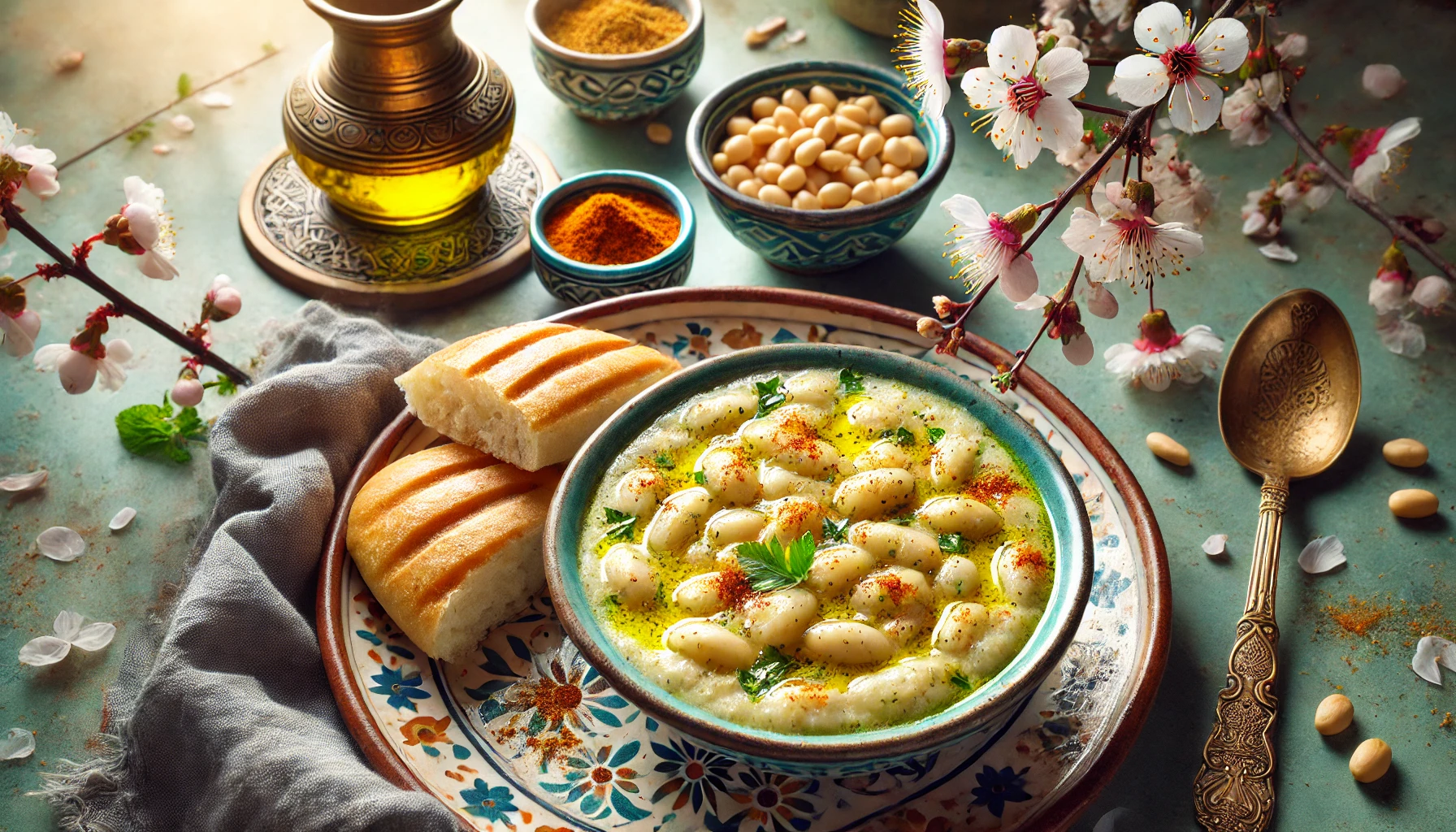
Moroccan Bissara
Moroccan Bissara: A Creamy Springtime Fava Bean Soup
Bissara is a traditional Moroccan soup made from dried fava beans, blended into a silky, nutritious purée and topped with olive oil and spices. Often enjoyed for breakfast or lunch, it’s especially comforting during the cooler days of spring when fresh herbs and warm bread accompany the dish perfectly.
Ingredients
For 4 servings:
- 300 g dried split fava beans (or green peas)
- 3 garlic cloves, peeled
- 1.2 liters water
- 1 teaspoon ground cumin
- 1 teaspoon sweet paprika
- 2 tablespoons olive oil (plus extra for serving)
- Salt to taste
- Lemon juice (optional, for garnish)
- Warm bread (for serving)
Preparation
Cooking the Beans
- Rinse the fava beans and soak overnight, or use without soaking if split.
- In a large pot, combine beans, garlic, and water. Bring to a boil and skim off any foam.
- Reduce heat and simmer for 50–60 minutes, or until beans are very tender.
Blending and Seasoning
- Remove from heat and blend the soup until smooth using an immersion blender or food processor.
- Return to low heat and stir in olive oil, cumin, paprika, and salt.
- Simmer for 5 more minutes to meld the flavors. Adjust thickness with extra water if needed.
Serving
Ladle Bissara into bowls, drizzle with olive oil, and sprinkle with additional cumin and paprika. Serve with warm crusty bread and a wedge of lemon if desired.
Tips and Variations
- Use peas: Green split peas can be used for a brighter color and lighter taste.
- Add spice: A pinch of cayenne or harissa adds heat.
- Top with herbs: Fresh parsley or cilantro adds freshness to each bowl.
FAQ
Can I make Bissara ahead of time?
Yes, it reheats well. Store in the fridge for up to 3 days.
Is Bissara gluten-free?
Yes, the soup itself is naturally gluten-free. Serve with gluten-free bread if needed.
Can I freeze Bissara?
Yes, it freezes well for up to 2 months. Defrost and reheat gently before serving.
Conclusion
Moroccan Bissara is a hearty, humble soup full of flavor and nutrition. Simple to make and deeply comforting, it’s a wonderful way to enjoy legumes during the spring season, especially when paired with rustic bread and fresh spices.